玉石混淆 玉石混交 ぎょくせきこんこう 角字でことわざ、四字熟語
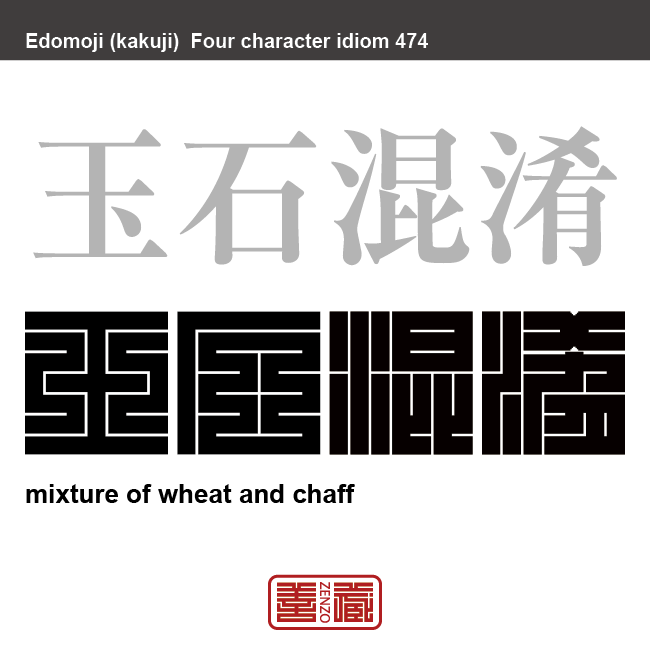
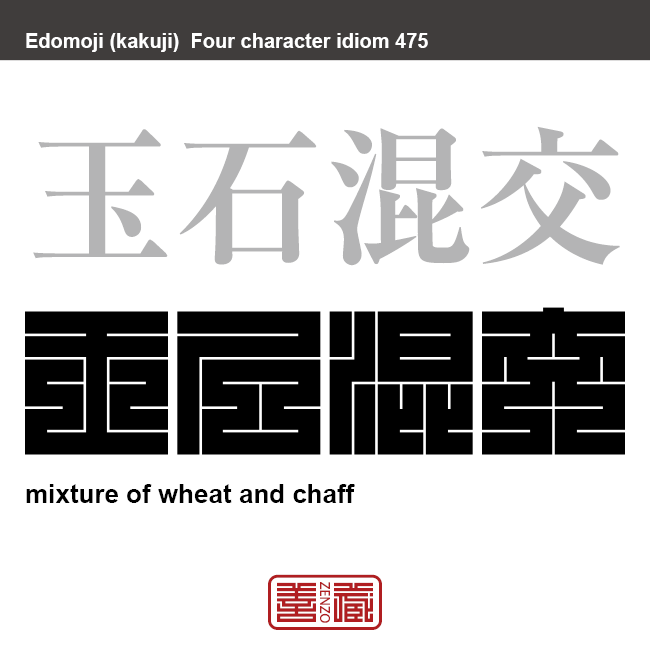
玉石混淆 玉石混交
ぎょくせきこんこう
Gyokuseki-Konkou
Mixture of Wheat and Chaff
Unicode:
[玉_0x7389][石_0x77F3][混_0x6DF7][淆_0x6DC6]
[玉_0x7389][石_0x77F3][混_0x6DF7][交_0x4EA4]
優れているものと、劣ったものが、区別なく入り混じっていること。
宝玉と石ころが混じり合っている意から。「玉石」は宝玉と石。
角字とは?
江戸時代に誕生した角字は、正方形のグリッド内にほぼ水平・垂直のラインのみで文字(漢字)が表現されるグラフィックアートです。
正方形という限られた空間の中に、あらゆる文字を閉じ込めようとするグラフィックデザインは、前述した、ミニマムな物に対する日本人特有のこだわりが随所に感じられます。
そのシンプルで有りながら、奥深い「角字」は多くの日本人を魅了し、お祭りで着る半被や印半纏(しるしばんてん)と言われる着物や、商標、印鑑、家紋、看板デザインなどに今日まで数多く使用されてきました。
What is Kakuji?
There is a style of penmanship called “Kakuji” in Japan. Edo-born Kakuji is a graphicart that expresses letters (kanji) with almost horizontal and vertical lines only.
The design which bases on many straight lines seems simple, or too plain even at its first glance; yet this beautiful artistic penmanship that encompasses the aesthetic of the Japanese in the Edo era, also known as “Iki”, and playfulness has long been inherited to this day, thanks to the masteries’ long years of efforts in training and refinement.
Kakuji with its simplicity and depth is used for designs such as trademark, hanko stamp, family crest and signboard.
























 2文字コード:MZ 3文字コード:MOZ 数字:508 ITU:258 ccTLD:.mz